M81 / M82 resolved-stellar-population workflow
This ledger documents how resolved-star catalogs become interpretable evidence for faint structure around M81 and M82. The two galaxies share a common pipeline but require different background treatments.
Catalog preparation
Select stellar sources from the available HST fields, retain field geometry, and preserve the identifiers required to trace every processed sample back to its origin.
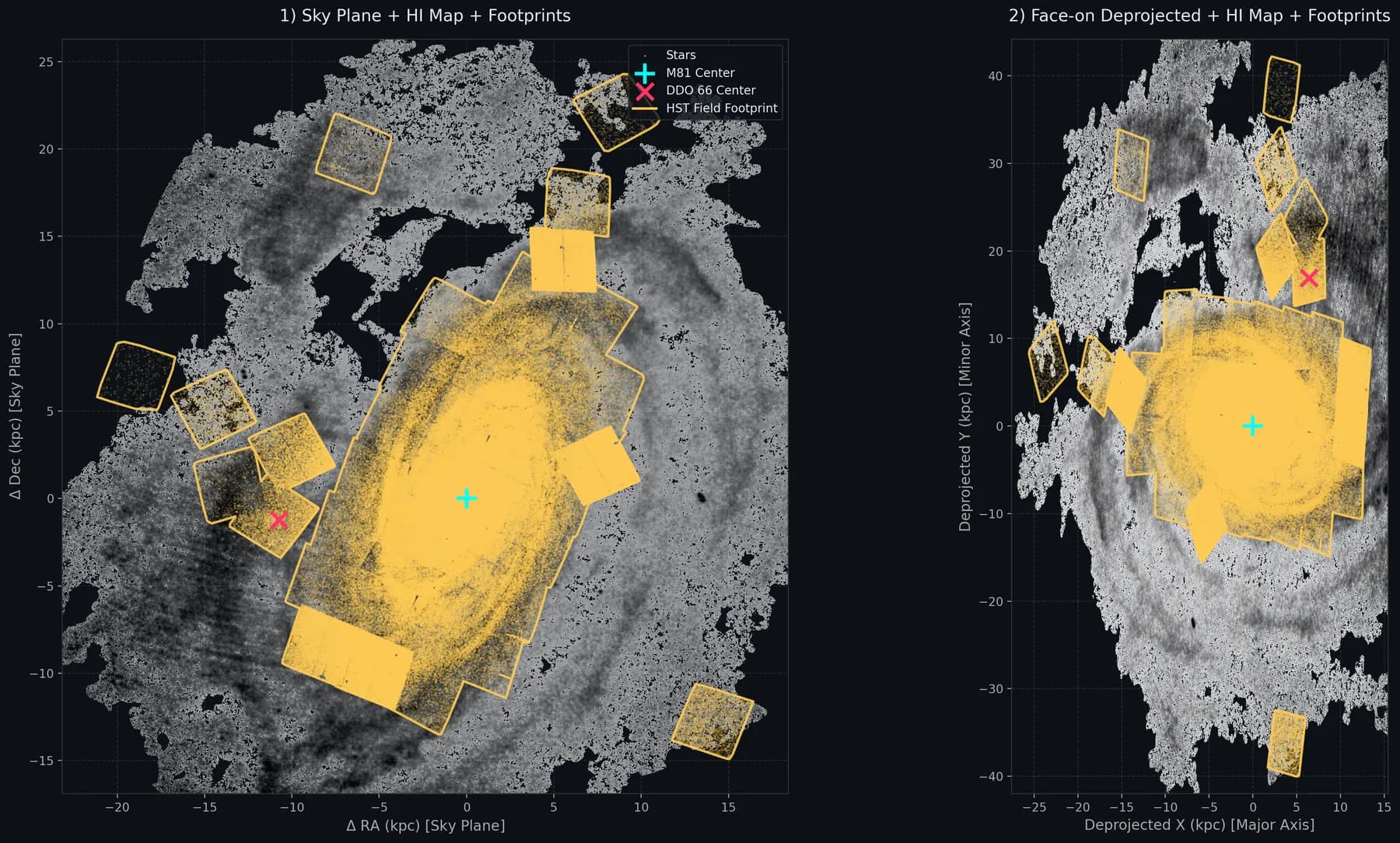
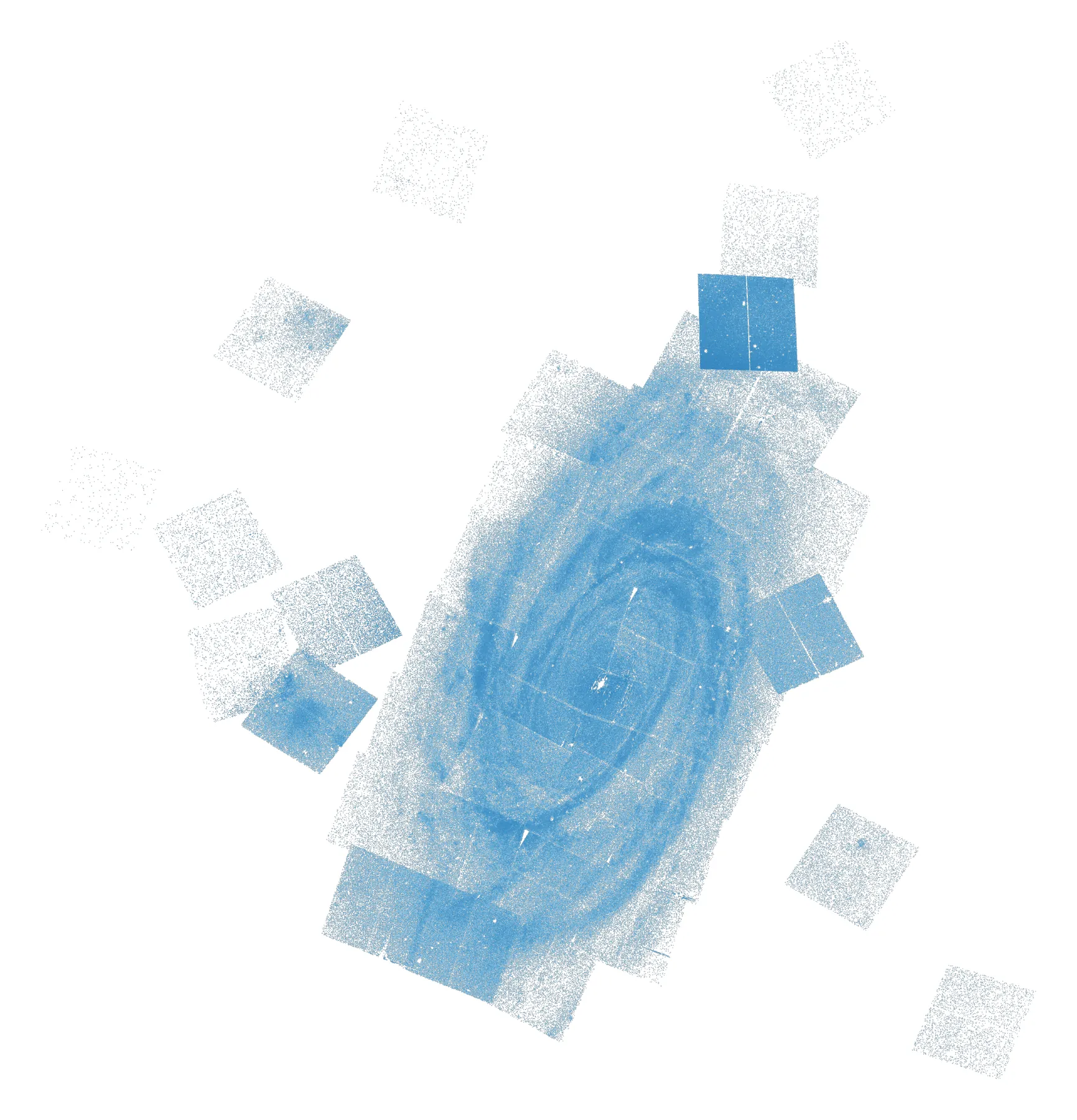
The same catalog is shown in sky-plane and deprojected coordinates. Yellow footprints make uneven HST coverage visible before any density structure is interpreted.
Overlap removal
Detect repeated measurements where neighboring fields overlap. Resolve duplicates before spatial aggregation so the same star does not artificially increase local density.
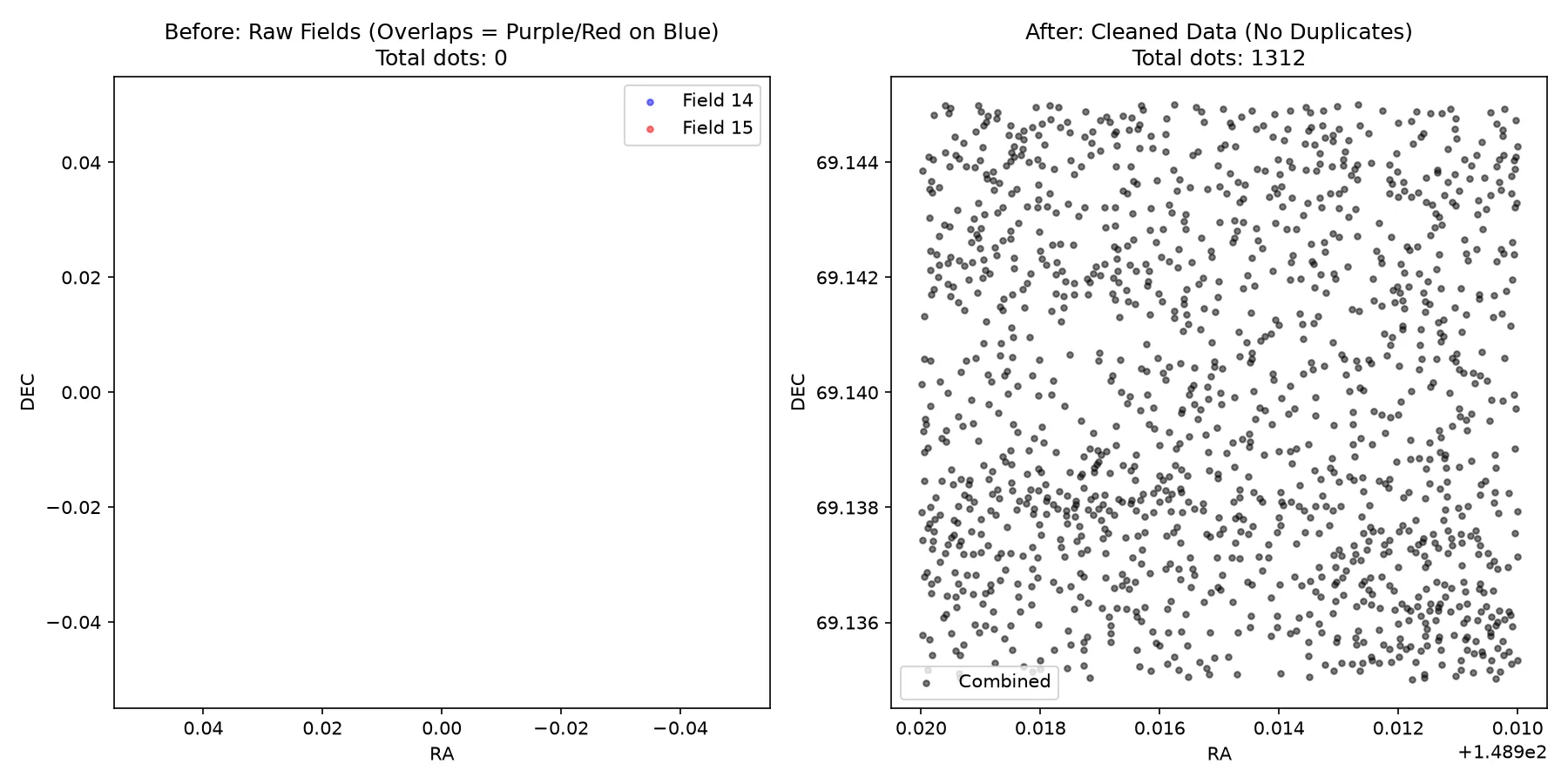
The paired frame makes the cleaning operation inspectable: overlapping field measurements on the left, one consolidated stellar sample on the right.
Density mapping
Aggregate the cleaned catalog onto a 200 × 200 spatial grid. Maintain consistent coordinate transforms and field footprints so density variations remain physically interpretable.
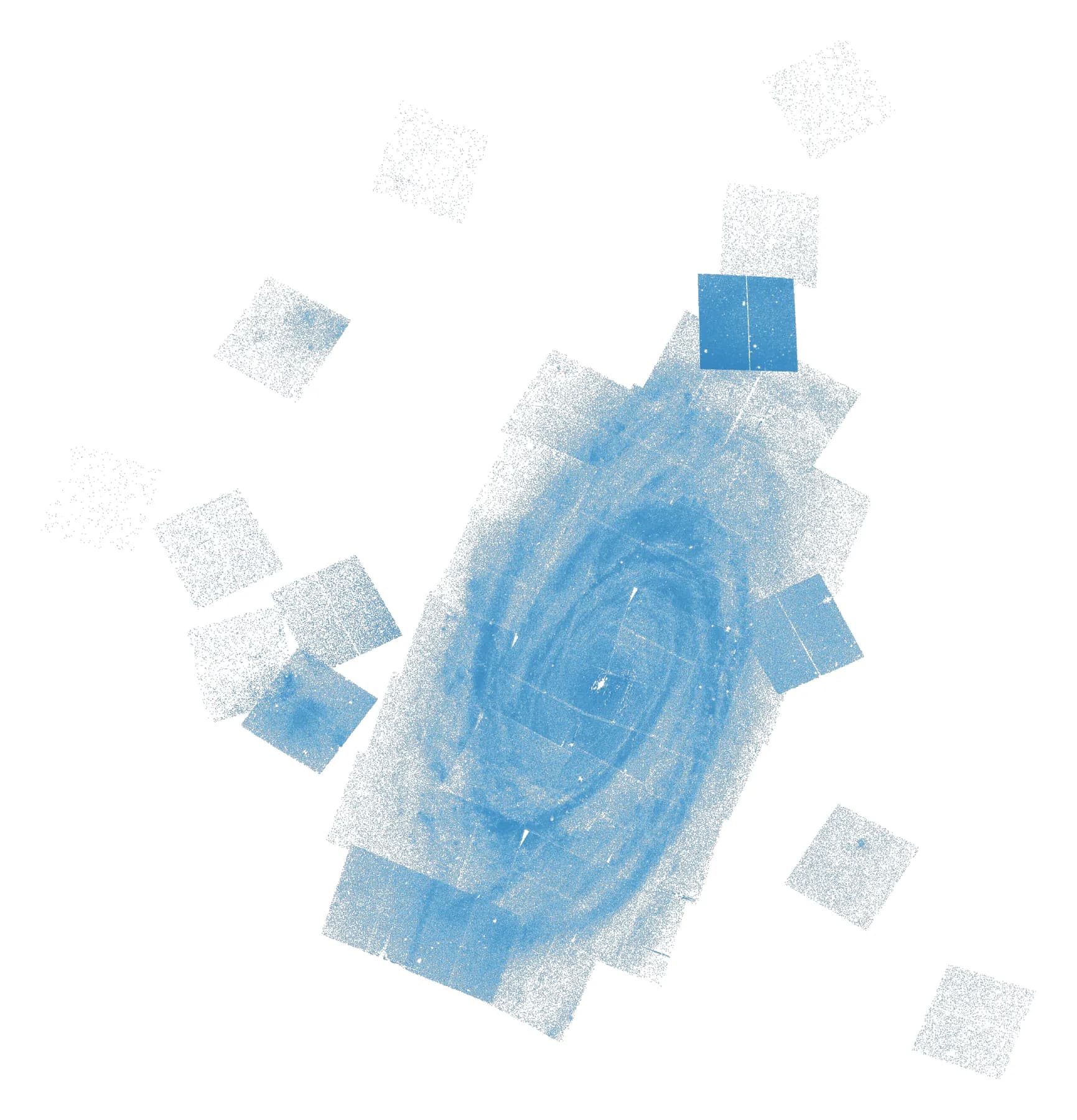
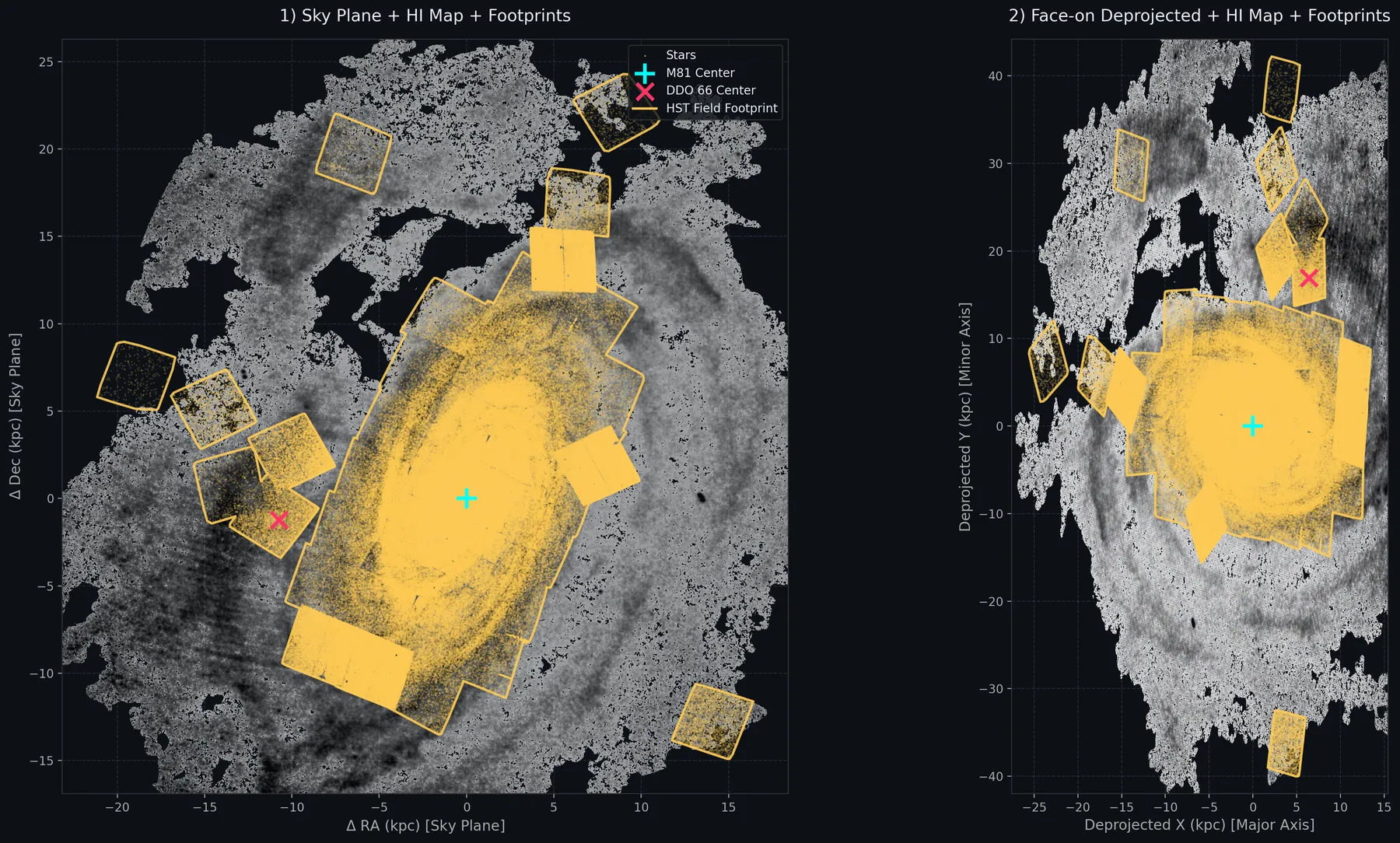
The full footprint keeps the central disk, outer fields, and uneven coverage in the same coordinate frame.
Background model
Use environment-specific background estimates:
- M81: wide-field hierarchical evidence across 33 HST fields;
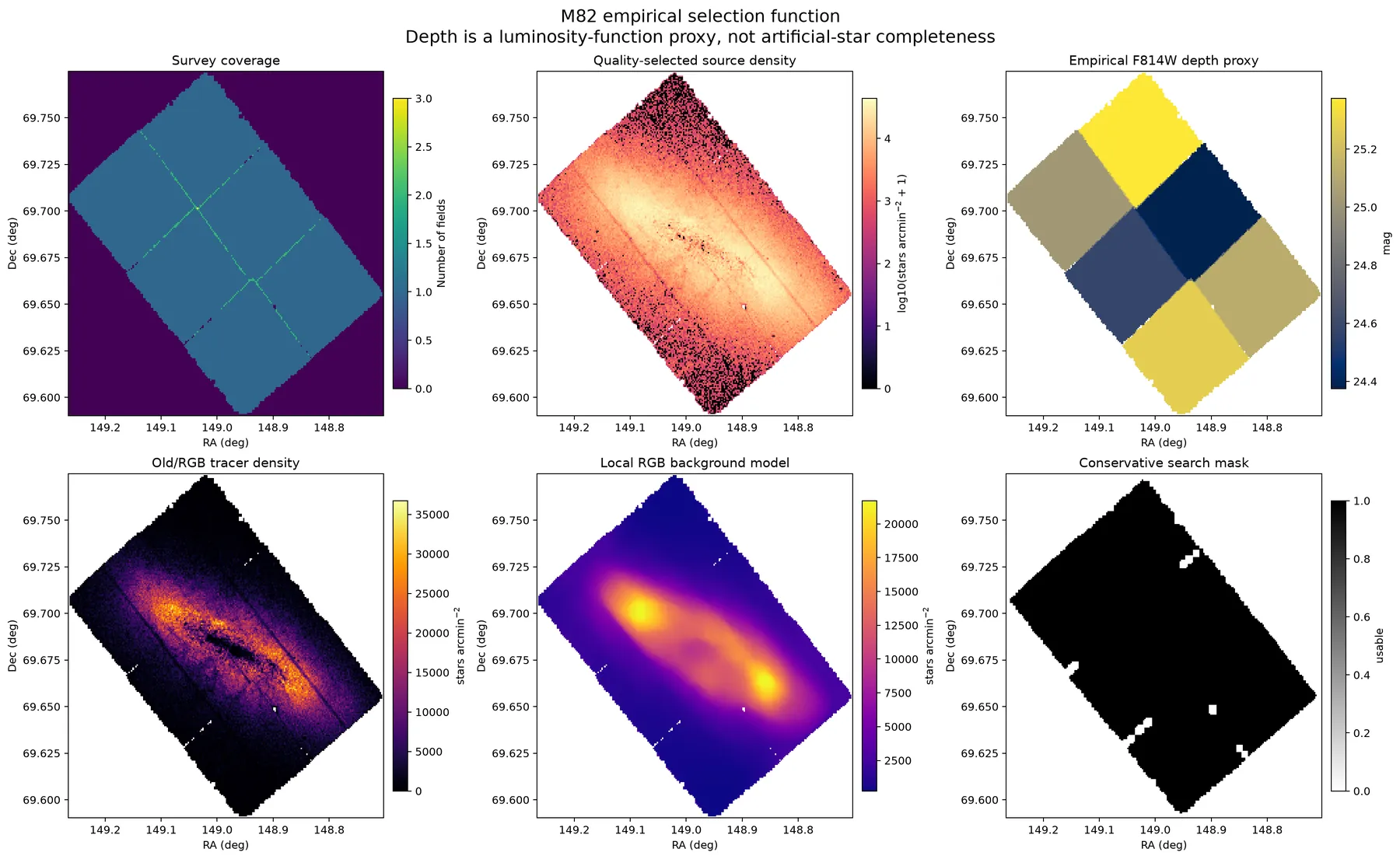
- M82: a localized median background that is less sensitive to its asymmetric starburst halo.
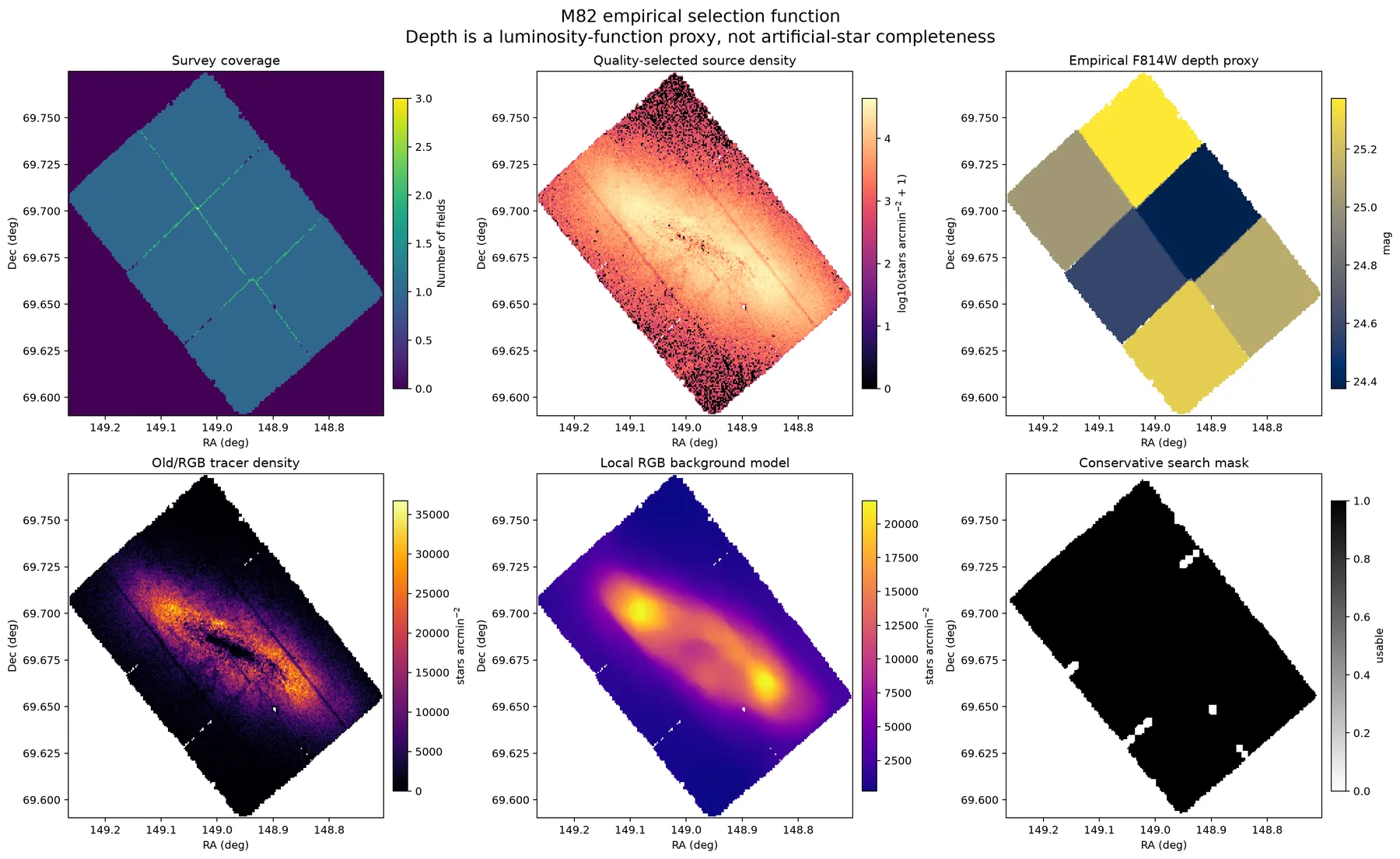
Coverage, source density, depth proxy, tracer density, background model, and usable mask are viewed together so detector and field-depth effects are not mistaken for astrophysical structure.
Poisson signal-to-noise
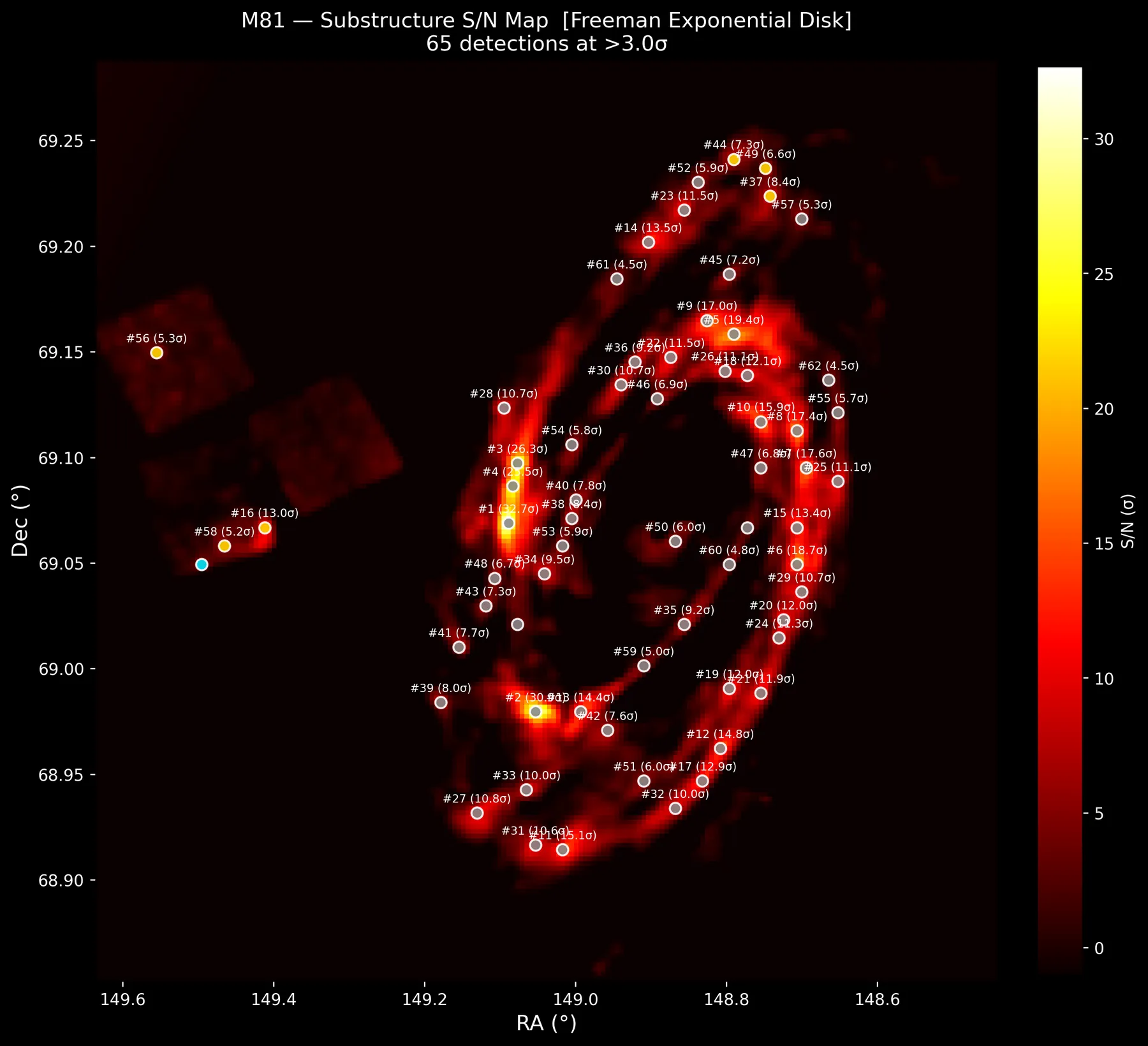
Compare observed counts with the modeled background under counting uncertainty. Candidate structures should be expressed as evidence relative to the expected background, not only as visually bright pixels.
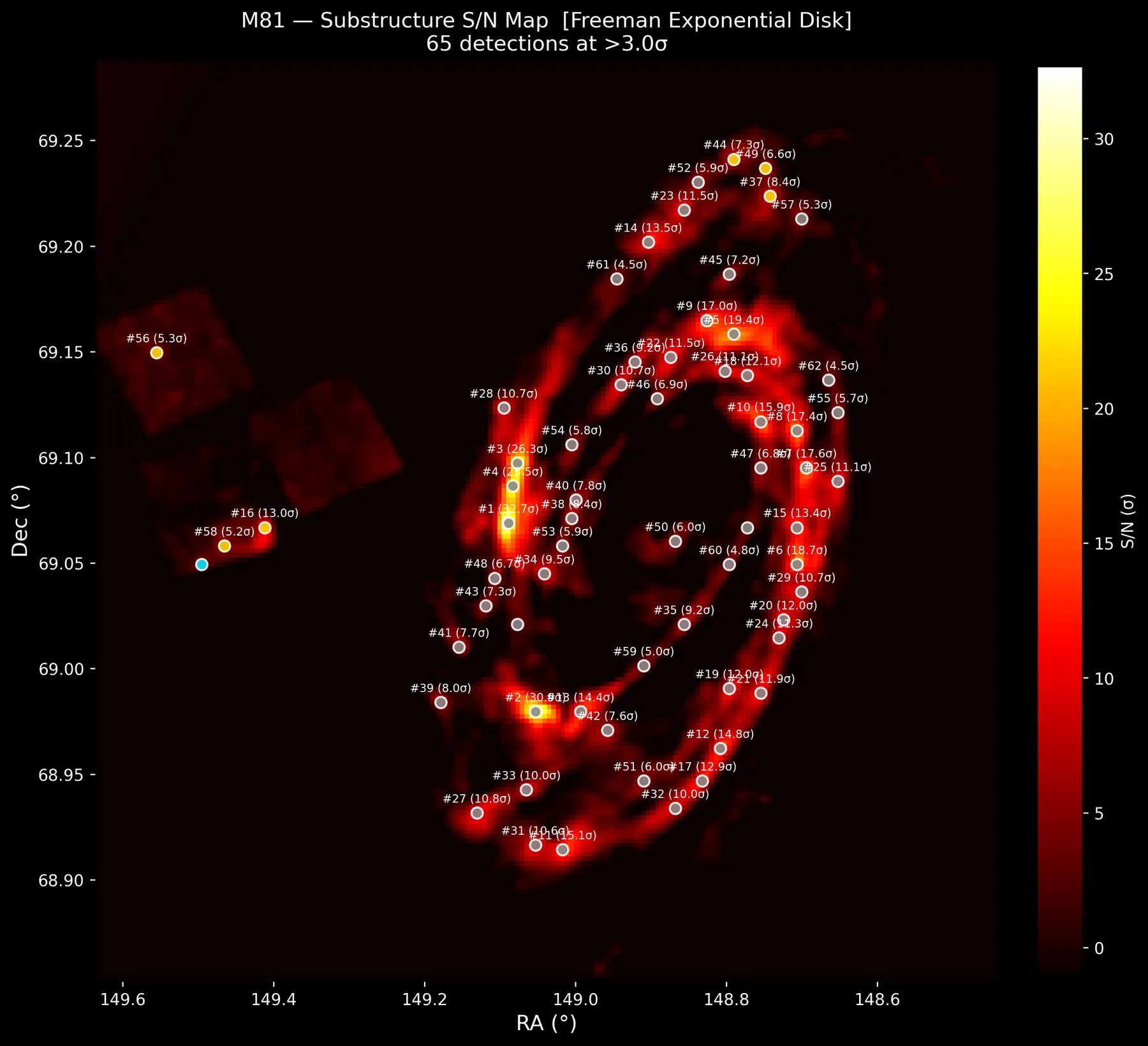
The labeled S/N map turns density residuals into evidence that can be compared numerically.
Validation
Review the candidate across alternate views, masks, smoothing choices, and source selections. Preserve complete axes and legends in the final figure record and link each output to its analysis workspace.
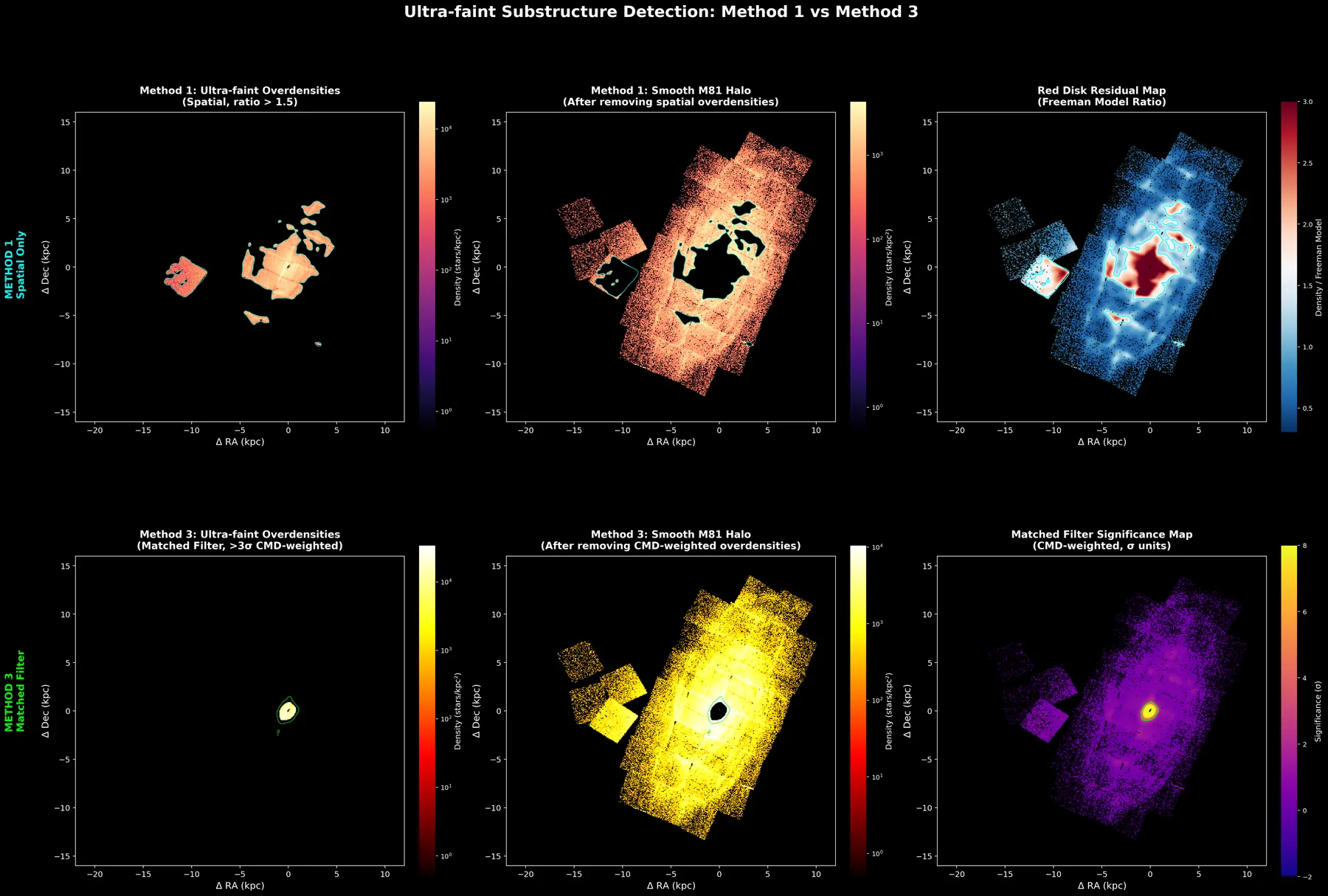
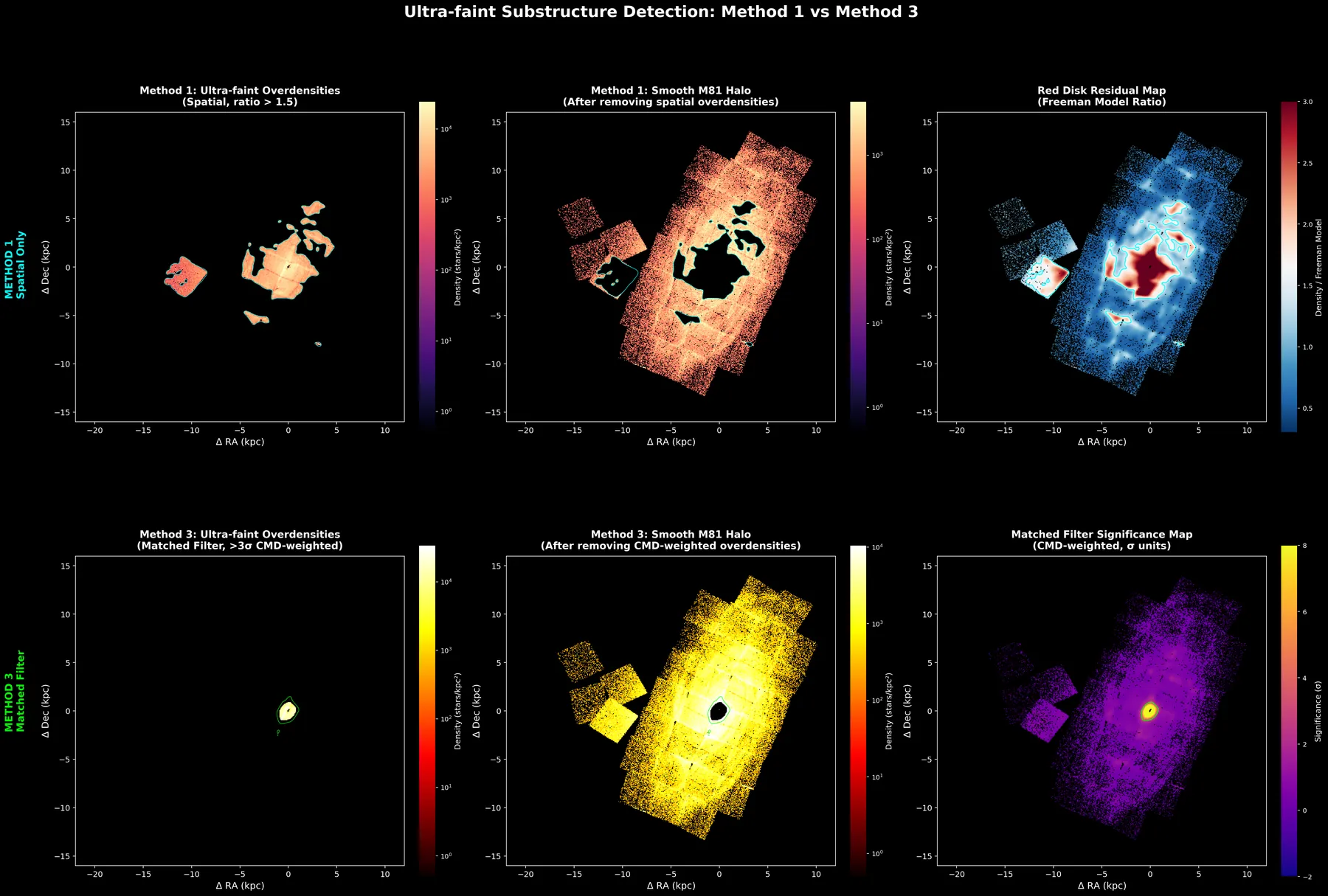
Agreement and disagreement between spatial-overdensity and matched-filter pipelines define what still needs review.
Interpretation boundary
The archive records analytical evidence; it does not turn every enhancement into an astrophysical claim. Morphology, robustness across processing choices, and agreement with external context remain necessary before interpretation.